|
 It
is essential that you enjoy yourself when on a trip, (otherwise,
whats the point?) whether it be for pleasure or even for business
and you must not be constantly worrying about what you should
or should not be doing. It
is essential that you enjoy yourself when on a trip, (otherwise,
whats the point?) whether it be for pleasure or even for business
and you must not be constantly worrying about what you should
or should not be doing.
The following tips may enable you to reduce many of the
potential problems you could encounter on your trip.
Fortunately,
most people in most countries that you will meet on your
travels abroad will be honest, friendly and hospitable. But
it is an unfortunate fact of life that not everyone you may
meet will be as such. There are unpleasant types out there,
allbeit very few.
Leave copies of your important documents such as: tickets,
drivers license, passport, visas, medical documents, prescriptions
and so on with a friend just in case you need a back-up sent
to you in an emergency. Also, leave a copy of your itinerary
with family or friends at home so that you can be contacted
in case of an emergency.
 Familiarise
yourself with any local laws and customs of the countries
to which you are travelling and abide by them. Especially
if you are thinking about applying for part time jobs because
you have decided to extend your stay. Know the laws about
exchanging money and deal only with authorised agents when
you exchange money or purchase art or antiques. Remember,
while you are in a foreign country, you are subject to its
laws. Familiarise
yourself with any local laws and customs of the countries
to which you are travelling and abide by them. Especially
if you are thinking about applying for part time jobs because
you have decided to extend your stay. Know the laws about
exchanging money and deal only with authorised agents when
you exchange money or purchase art or antiques. Remember,
while you are in a foreign country, you are subject to its
laws.
Never leave your luggage unattended in public areas
especially in airports and never accept packages from strangers.
Put identifying markings on the suitcases you check through
such as bold coloured tape in a recognisable design. You could
also put tape over the closure to prevent tampering by baggage
handlers. Don't put all your valuables in luggage you check;
e.g. jewelry, cameras, watches. Remove old airline destination
tags.
Don't use your home address on you luggage tags. You don't
need to let anyone know where your empty house is located.
Put your business card in your luggage tag. For an extra measure
of security, attach another business card inside in case your
bag gets lost.
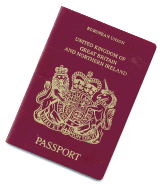 Make
sure you have a signed, valid passport (and any visas,
if required). most countries require you to have a full 10
year passport. Make
sure you have a signed, valid passport (and any visas,
if required). most countries require you to have a full 10
year passport.
Your passport should be valid for at least six months after
your expected date of return to the UK and have at least two
blank pages to allow room for visa stamps. If not, get a new
one.
Before you go, make sure you fill in the emergency
contact information page of your passport!
Make two copies of your passport identification page.
This will facilitate replacement if your passport is lost
or stolen. Leave one copy at home with friends or relatives.
Carry the other with you in a separate place from your passport.
 To
avoid being a target of crime, try not to wear conspicuous
clothing and expensive jewelry. Dress conservatively and try
to blend in. Don’t draw attention to yourself, avoid
wearing flashy jewelry and don’t display large amounts
of cash. Do not carry excessive amounts of money or unnecessary
credit cards. Carry only enough cash to make it through the
day and leave the rest in the hotel’s safe. To
avoid being a target of crime, try not to wear conspicuous
clothing and expensive jewelry. Dress conservatively and try
to blend in. Don’t draw attention to yourself, avoid
wearing flashy jewelry and don’t display large amounts
of cash. Do not carry excessive amounts of money or unnecessary
credit cards. Carry only enough cash to make it through the
day and leave the rest in the hotel’s safe.
If you haven’t left your valuables at home, leave
them in your hotel’s safe. Do not carry your passport
around, leave it in the safe in your hotel. A photocopy will
suffice if local law states that you need to.
Avoid travelling alone. Always be aware of what is
going on around you. Try to look as if you know where you
are going, this may not be so easy if after all it is the
first ever time in that country, but even still look confident
as IF you know.
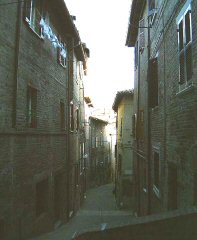 Stick
to the main roads and avoid taking shortcuts down narrow alleys
and/or poorly lit streets. Carrying maps around looking perplexed,
and stopping to look at monuments or buildings, obviously
shows that you are from out of town, and may attract the wrong
type of attention. Stick
to the main roads and avoid taking shortcuts down narrow alleys
and/or poorly lit streets. Carrying maps around looking perplexed,
and stopping to look at monuments or buildings, obviously
shows that you are from out of town, and may attract the wrong
type of attention.
 Do
NOT pull large amounts of cash out of your pocket. This
will catch attention, no matter what country you are in. It
sounds so silly, but it is amazing how many people pull out
a mound of cash to be some small item. Do
NOT pull large amounts of cash out of your pocket. This
will catch attention, no matter what country you are in. It
sounds so silly, but it is amazing how many people pull out
a mound of cash to be some small item.
Try to think about where you are going that day and
carry sufficient cash or travellers cheques for that and any
unforeseen extras, plus a card. That should cover all you
need and will limit any losses if anything did happen. Using
travellers cheques, will always be helpful, as will using
a credit card for any purchases made so that you can take
advantage of the additional insurance offered.
 Make
a list of your credit card and travellers cheques company
phone numbers in case you have to cancel them in the event
of loss or theft. Make
a list of your credit card and travellers cheques company
phone numbers in case you have to cancel them in the event
of loss or theft.
Approach any "special deals" with caution,
especially if you have to go off the beaten path to get them.
If it sounds too good to be true, it is - it's as simple as
that!
Never accept gifts or packages from unknown parties
to carry out of the country and deliver or mail to someone
they know.
 Beware
of well-dressed people who happen to be around, happen
to speak your language fluently and happen to come up to you
and start chatting. Gangs exist that are fronted by some very
credible people who win your confidence and then take you
to see their friend or a relative where you can buy lots of
different things at low, low prices. Don't be tempted -
you will get ripped off! Beware
of well-dressed people who happen to be around, happen
to speak your language fluently and happen to come up to you
and start chatting. Gangs exist that are fronted by some very
credible people who win your confidence and then take you
to see their friend or a relative where you can buy lots of
different things at low, low prices. Don't be tempted -
you will get ripped off!
Do NOT accept drinks from anybody that you have just met,
especially if in dubious surroundings or do not know, they
could be laced with any type of concoction.
 Don't
under any circumstances get involved with or take drugs.
Some counties have severe penalties for drug misuse including
the death penalty. You could get to stay a long time in that
at the government's expense if you are caught even with a
very small amount. Don't
under any circumstances get involved with or take drugs.
Some counties have severe penalties for drug misuse including
the death penalty. You could get to stay a long time in that
at the government's expense if you are caught even with a
very small amount.
Whereverer you travel it is always worthwhile making
a note of where your local embassy is. Your embassy is your
connection to your home country while on holiday and are there
to assist if you lose your passport or are in trouble. You
will normally find your embassy in the capital city of a country,
though other major cities might have consulates or comsulate
offices.
If you plan to stay abroad for more than two months,
upon arrival you should notify by phone or register in person
with the British Embassy or High Commission in the country
you are visiting. This will facilitate communication in case
someone contacts the embassy looking for you.
 Finally,
if you do get into trouble, contact the nearest British
Embassy or High Commission. (or your own embassy). Finally,
if you do get into trouble, contact the nearest British
Embassy or High Commission. (or your own embassy).
Any British national who gets into difficulty overseas
can seek help from the nearest British diplomatic mission
24 hours a day.
Where there is no British representative in a country,
British nationals may instead contact the nearest EU Mission
in that country.
 The
first thing you should do if anything goes wrong is to
contact your relatives and friends at home. They can then
take appropriate action within the UK. The same advice should
be taken if a natural disaster occurs during your visit to
a foreign country. The
first thing you should do if anything goes wrong is to
contact your relatives and friends at home. They can then
take appropriate action within the UK. The same advice should
be taken if a natural disaster occurs during your visit to
a foreign country.
In most cases people only need advice, but in cases
of real difficulty such as death abroad, serious accidents
and illnesses, arrests and detentions, or those at risk of
physical harm, the Consul will take action.
The Consul will do everything possible to help British
nationals who have been arrested or detained overseas. The
Consul cannot get you out of jail or give you money. But the
Consul will take action if your rights have been denied or
abused.
|



 The
European Health Insurance Card (EHIC) replaces
the old E111 paper form. The card allows access
to state-provided healthcare in all EEA (European
Economic Area) countries and Switzerland often
for free or at a reduced cost. Everyone who
is a UK resident and is travelling abroad should
carry a European Health Insurance Card. Each
card is valid for up to five years – ensure
that your card is valid before travelling.
The
European Health Insurance Card (EHIC) replaces
the old E111 paper form. The card allows access
to state-provided healthcare in all EEA (European
Economic Area) countries and Switzerland often
for free or at a reduced cost. Everyone who
is a UK resident and is travelling abroad should
carry a European Health Insurance Card. Each
card is valid for up to five years – ensure
that your card is valid before travelling.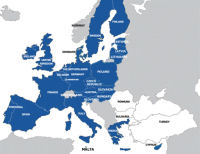 If
you are travelling abroad especially for treatment.You
cannot use your European Health Insurance
Card.
If
you are travelling abroad especially for treatment.You
cannot use your European Health Insurance
Card.