|
 Drugs Drugs
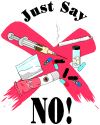
Using mind altering substances can risk placing you
in unwanted or dangerous situation, increases in risk-taking
behaviour and can lead to unsafe choices such as violence
or risky sexual practices.
Loss of control, disorientation, psychiatric disassociation,
psychosis, or the effects of withdrawal (such as anxiety,
agitation, hallucinations, delusion, delirium tremens, seizures,
and hyperactivity) in an unfamiliar environment increases
stress levels and could result in a medical emergency or arrest.
If
you are going to use, buy or sell prohibited substances
abroad, be aware that the posession and/or use of some drugs
is illegal in the majority of countries and can lead to criminal
charges, heavy fines, imprisonment, or the death
penalty (i.e. Singapore, Iran, Saudi Arabia and
others).
In addition, the quality of the substance may be different
from what you may be used to back home. Consuming a drug of
an unknown quality may lead to unwanted physical or mental
effects or cause you to overdose. If you do intend to use
drugs, make sure you know the risks of accidental overdose,
where to get clean injecting equipment, and always practice
safe sex.
Fire
Hotels in some countries may be built to poor standards
and have inadequate fire escapes. You should always check
to see where the emergency exits (if any) are located. Gas
and electrical appliances may in a dangerous condition. Balconies
and staircases may be unsafe.
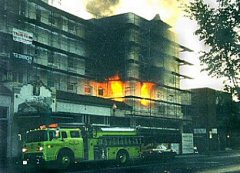 Fire
is a significant cause of death and injury abroad. In
many countries, fire regulations are slack or non existent.
Never smoke in bed and ensure that cigarettes are properly
extinguished. Fire
is a significant cause of death and injury abroad. In
many countries, fire regulations are slack or non existent.
Never smoke in bed and ensure that cigarettes are properly
extinguished.
Remember, smoke inhalation can also be fatal and the best
way to avoid it is to crawl low under the smoke.
If you travel internationally you should buy appropriate
travel insurance before you go, covering you for existing
physical or mental health and any activities you will be doing
whilst you are away.
Travel insurance provides financial cover for many
eventualities and situations that you might encounter when
abroad. This can include: medical expenses (paying for medical
treatment whilst you are abroad) medical repatriation (return
you to your home country).
If you do not have appropriate insurance before you
travel, you could be liable for emergency expenses, including
medical treatment, which may cost thousands of pounds.
You should arrange travel insurance as soon as you book
your holiday. (So you are covered if something happens
and you need to cancel).
 Personal
Security Personal
Security
To reduce any risk of mugging travel in groups, avoid
remote areas after dark, use a torch, keep on the move, carry
an alarm or an anti-personnel spray (may be illegal in some
countries), wear modest clothing, do not display wealth.
Be aware that pickpockets are active in crowded areas
such as markets and tourist attactions.
Many areas are not safe to wander around at night,
including those that look safe by daylight. While driving
consider locking your car doors at stopping points especially
at night in isolated areas.
Be aware of political unrest. Up to date information
is available from the Foreign and Commonwealth Office on line.
Do not rely on information from local residents.
In some countries, producing cameras, tape recorders
etc. in sensitive areas such as near airports and railway
stations can result in arrest on suspicion of spying.
Road Safety
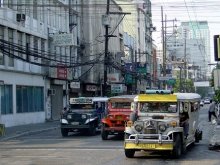 Road
accidents are responsible for more deaths amongst tourists
than any of the diseases mentioned on this site. Road
accidents are responsible for more deaths amongst tourists
than any of the diseases mentioned on this site.
When crossing the road remember the traffic may come
from the opposite direction to the one in your home country.
Drivers in many countries do not observe pedestrian
crossings or traffic signals. e.g. in Bangkok you are
likely to be run over on a zebra crossing if you treat it
like you would in the UK and expect the traffic to stop for
you.
Transport
Whilst receiving wide publicity, accidents in the air
and on ships are extremely rare. Some airlines are safer than
others (published data available). Ferries in developing countries
are often overcrowded and carry inadequate safety equipment.
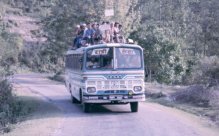 Trains
and buses are often overcrowded. You should think twice
about taking an overloaded up-country bus and avoid local
habits like travelling on the roofs of trains and busses and
jumping on and off while they are moving. Trains
and buses are often overcrowded. You should think twice
about taking an overloaded up-country bus and avoid local
habits like travelling on the roofs of trains and busses and
jumping on and off while they are moving.
Motor vehicles may be poorly maintained. Check over
any hire vehicle very carefully for mechanical defects especially
brakes and tyres.
When you are driving, always wear a safety belt, strictly
observe speed limits, traffic lights and signs. Never drink
and drive.
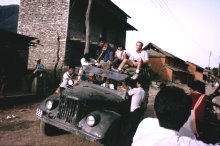 Local drivers may not observe traffic rules but you
always should. Remember, in some countries they drive on the
right, it is easy to forget.
Local drivers may not observe traffic rules but you
always should. Remember, in some countries they drive on the
right, it is easy to forget.
Be very careful on potholed and non-tarmacadamed 'dust'
roads which can become badly eroded from continual exposure
to the elements.
Scooters and motorcycles are frequently unstable on
poorly maintained roads and those riding have very little
protection in the event of an accident. Always wear a safety
helmet.
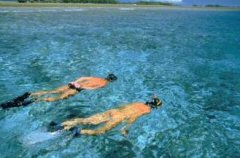 Water
Hazards Water
Hazards
Alcohol and swimming do not mix!
Beware of fast moving tides and currents, especially the
undertow from waves in deep water where even strong swimmers
may find it difficult to get back to the shore.
Avoid swimming alone. Swim in approved places when there
is a beach patrol or lifeguard service. Always wear proper
life jackets when taking part in certain types of watersports
like sailing, windsurfing, canoeing etc.
Sunburn is common and may be unexpected since the swimmer
is kept cool by the water.
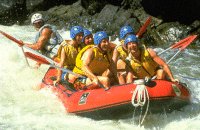 Avoid
using airbeds or inflatable dinghies in the sea. If there
is an offshore wind they can easily been blown a long distance
off shore. If this happens the scenario is often panic, jumping
off, exhaustion and hypothermia. Invariably it is better to
stay 'aboard', try to attract attention and await rescue. Avoid
using airbeds or inflatable dinghies in the sea. If there
is an offshore wind they can easily been blown a long distance
off shore. If this happens the scenario is often panic, jumping
off, exhaustion and hypothermia. Invariably it is better to
stay 'aboard', try to attract attention and await rescue.
Water is the home of some very dangerous creatures
like crocodiles, hippos and sharks. Sea creatures like urchins,
jellyfish, molluscs or fish may be unexpectedly venomous.
Be aware of local dangers.
 Do
not swim immediately after a big meal when cramp is more
likely to occur. Low water temperature can induce hypothermia.
This can be rapidly fatal - within minutes. Do
not swim immediately after a big meal when cramp is more
likely to occur. Low water temperature can induce hypothermia.
This can be rapidly fatal - within minutes.
Both the sea and inland deep water lakes may be very
cold even during hot summer months.
Visibly dirty recreational water in pools, lakes and rivers
especially in the tropics should be avoided. There is always
a danger of contracting water borne diseases like shistosomiasis
or leptospirosis in these areas.
Foot injuries on beaches are common in those not wearing
shoes.
Outdoor & Adventure Activities
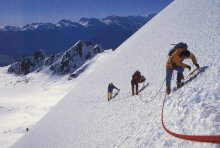 Pursuits
such as scuba diving, mountain climbing, white water rafting
and hang gliding can be dangerous in unfamiliar surroundings.
Additional insurance may be required for these and similar
activities. Pursuits
such as scuba diving, mountain climbing, white water rafting
and hang gliding can be dangerous in unfamiliar surroundings.
Additional insurance may be required for these and similar
activities.
Get physically fit in advance of your trip. Do not
be over ambitious - make sure you are fully trained for the
degree of skill required.
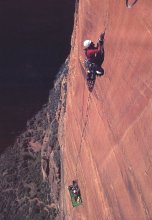 Avoid
excessive fatigue - accidents often occur before lunch
and in the evening. Keep up your carbohydrate and fluid intake. Avoid
excessive fatigue - accidents often occur before lunch
and in the evening. Keep up your carbohydrate and fluid intake.
If you are travelling in mountainous areas become familiar
with the terrain and the hazards involved, including avalanche
potential. Use
guide books and local maps when available. Observe adverse
weather warnings.
Do not 'economise' on protective clothing, boots and safety
equipment. In
snow conditions watch out for skiers and snowboarders. It
is your responsibility to avoid skiers in front of you.
Consider helmets for younger skiers and snowboarders.
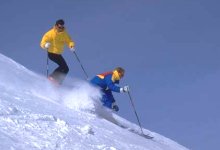 Skiers
should learn to fall correctly and to release your ski
stick before it causes skiers thumb! Skiers
should learn to fall correctly and to release your ski
stick before it causes skiers thumb!
Serious injuries that may require a blood transfusion
can be of concern where HIV screening of blood products is
not universal.
Skin injuries can lead to tetanus and therefore, ten
yearly boosters of tetanus toxoid are advised before travelling
to many countries.
|
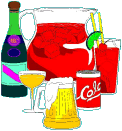 The
risk of an accident occurring is exacerbated by
alcohol. It is easy to drink too much alcohol
in a hot climate. Locally brewed drinks are often
stronger than one might expect.
The
risk of an accident occurring is exacerbated by
alcohol. It is easy to drink too much alcohol
in a hot climate. Locally brewed drinks are often
stronger than one might expect.
 Most
of us enjoy a drink every now and then and this is no exception
when we’re relaxing in the sun on holiday with our friends
and family.
Most
of us enjoy a drink every now and then and this is no exception
when we’re relaxing in the sun on holiday with our friends
and family. When
in unfamiliar environments it's easy to overlook the importance
of responsible drinking and this can lead to accidents and
medical emergencies occurring.
When
in unfamiliar environments it's easy to overlook the importance
of responsible drinking and this can lead to accidents and
medical emergencies occurring. Know
your limits: Each person is different and their bodies
will react differently to alcohol. Don’t try to compete
with friends or keep up with the drinking habits of others.
Additionally, look out for signs of intoxication in yourself
and others such as slurred speech, impaired coordination,
nausea, increased risk taking and poor decision making.
Know
your limits: Each person is different and their bodies
will react differently to alcohol. Don’t try to compete
with friends or keep up with the drinking habits of others.
Additionally, look out for signs of intoxication in yourself
and others such as slurred speech, impaired coordination,
nausea, increased risk taking and poor decision making.